
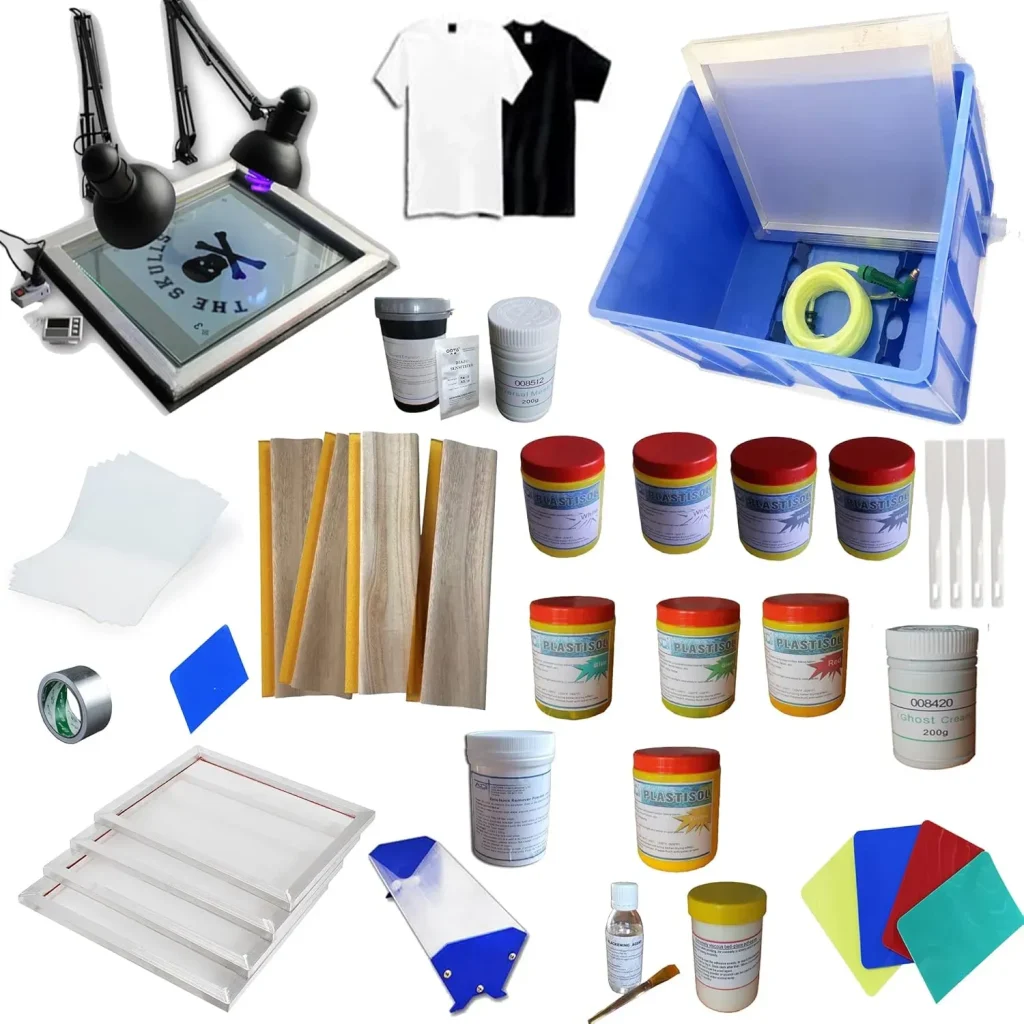
Choosing the right screen printing materials can transform your results, delivering sharper details, richer colors, and longer-lasting prints. At the core, screen printing screens, emulsions for screen printing, and screen printing inks work together to define edge sharpness, opacity, and durability. Understanding the types of screen printing inks helps you plan color range and workflow across cotton tees, paper, and blends. This guide blends practical testing with substrate awareness so you can optimize for color vibrancy, wash resistance, and production efficiency. By the end, you’ll have a clear framework to compare screens, emulsions, and inks and to test them before committing to large runs.
In other terms, the essential toolkit for industrial print work includes frames, mesh, stencils, and inks that move pigment from a prepared image onto fabric or paper. Beyond those basics, concepts like emulsions, stencil durability, and curing parameters influence sharp edges, color strength, and wash resistance. A practical approach is to evaluate the substrate, design complexity, and run length, then compare ink families, screen tension, and stencil durability. If you’re asking how to choose screen printing materials, this mindset emphasizes testing small batches and documenting results to guide larger orders.
How to Choose Screen Printing Materials: A Practical Framework
Choosing screen printing materials begins with understanding the core trio—screens, emulsions, and inks—and how they align with your substrate and design goals. This guide helps you approach selection methodically, emphasizing the question of how to choose screen printing materials so you can predict performance, minimize trial runs, and maintain consistency across batches. By considering print depth, detail, and durability, you set up a framework that translates into reliable results from one run to the next.
Start by evaluating your typical substrates, from cotton tees to paper, and then map how each material will interact with that surface. Think about screen printing screens for detail versus reduction in ink deposition, emulsions for screen printing for stencil longevity, and screen printing inks for color vibrancy and wash resistance. With a practical testing plan in place, you’ll be able to compare options quickly and converge on a material set that delivers crisp edges and dependable performance.
Understanding Screen Printing Screens: Frame, Mesh, and Tension
Screens are the physical gatekeepers of your print, and the phrase screen printing screens often comes up when printers discuss setup. A stable frame—typically aluminum for lightness and rigidity or wood for affordability—helps maintain consistent tension across cycles. The mesh fabric, your true ink gateway, influences detail, ink flow, and overall print fidelity.
When selecting screen printing screens, you’ll balance frame material, mesh count, and mesh material to suit your ink and substrate. Higher mesh counts yield finer details but require careful ink viscosity and surface preparation, while lower counts deposit more ink for bold designs. Tension and fabric compatibility are key, ensuring edges stay sharp during long runs and preventing sag that blurs lines.
Emulsions for Screen Printing: Photopolymer vs Diazo and Edge Durability
Emulsions are the light-sensitive layers that define stencil durability and edge sharpness. The emulsions for screen printing landscape is typically split between photopolymer emulsions and diazo emulsions, each with its own workflow and maintenance needs. Photopolymer emulsions are popular for high-detail work and repeatable stencils, while diazo emulsions are chosen for tougher reclamation cycles and enhanced stencil longevity.
Beyond the basic type, consider shelf life, storage conditions, and compatibility with your inks and wash-out chemistry. An emulsion’s performance depends on ink compatibility (water-based, solvent-based, or plastisol), exposure parameters, and the environmental conditions of your shop. A well-matched emulsion, when paired with the right screen and ink, supports sharp edges and durable prints across multiple runs.
Exploring Screen Printing Inks: Plastisol, Water-Based, and Specialty Options
Ink choice is the visible face of your screen printing materials. Plastisol inks offer opacity and strong color coverage, while water-based inks provide a softer hand and breathability. Each ink family brings different curing needs, wash-fastness, and handling characteristics that affect the final feel of the print.
To navigate the options, consider the types of screen printing inks and their suitability for your substrates. Plastisol may be preferred for bold, fast color on a range of fabrics, whereas water-based inks excel on cotton and blends with a softer finish. Specialty inks—such as discharge or UV-reactive formulations—expand effects but require careful integration with emulsions and curing schedules to maintain color accuracy and durability.
Matching Materials to Substrates: Textile, Paper, and Specialty Surfaces
Different substrates demand different material configurations. For textiles, you’ll prioritize ink adhesion, opacity, and wash durability, often aligning water-based inks with an emulsion tuned for fabric compatibility and a mesh count that preserves detail without stiffness. On paper, high-coverage plastisol or pigment-based inks are common, chosen for archival quality and print opacity.
Special surfaces like glass, ceramic, or metal require inks designed for non-porous substrates and sometimes solvent-based chemistries. The key is aligning the screen printing materials to the surface properties—porosity, texture, and heat tolerance—so the stencil remains durable and ink adheres properly through the curing process. Substrate-specific testing helps you confirm compatibility before committing to large runs.
Testing, Quality Control, and Troubleshooting Your Screen Printing Materials
A robust testing regime validates choices in screen printing materials. Create controlled test prints that vary mesh counts, emulsions, and ink formulations to assess detail, edge sharpness, opacity, and hand feel. Document substrate type, ink viscosity, curing times, and ambient conditions to build a reproducible baseline for future runs.
Use the results to calibrate your process, adjusting tension, squeegee pressure, and curing schedules. Maintaining a detailed log helps you reproduce successful configurations and quickly troubleshoot when results diverge. Regular testing also supports ongoing optimization of how the components—screens, emulsions, and inks—work together to achieve consistent, high-quality prints.
Frequently Asked Questions
What are the core screen printing materials like screen printing screens, emulsions for screen printing, and screen printing inks, and how do they affect print quality?
In screen printing, the core materials—screen printing screens (frame and mesh), emulsions for screen printing (the stencil layer), and screen printing inks—determine every major outcome. Screens influence resolution and ink deposition; emulsions affect stencil edge sharpness and durability; inks control color vibrancy, opacity, and wash resistance. Choosing compatible combinations with your substrate and production goals leads to crisper lines, better color matching, and longer-lasting prints. Start with a baseline set and adjust based on design details and wash tests.
How should you choose screen printing inks for different substrates and color goals, considering the types of screen printing inks?
Consider the main types of screen printing inks—plastisol, water-based, and solvent-based—with different hand-feel, opacity, curing requirements, and adhesion. Plastisol is opaque and durable on fabrics but needs heat curing and may feel heavier; water-based inks offer a softer hand but require careful viscosity control and fabric prep; solvent-based inks suit non-porous substrates and provide strong adhesion but require ventilation. Align ink choice with substrate porosity, desired hand feel, color opacity, and production workflow.
What are emulsions for screen printing and how do you select the right emulsion?
Emulsions for screen printing come in photopolymer and diazo types. Photopolymer emulsions are fast, detail-friendly, and good for multi-color runs; diazo emulsions are valued for stencil longevity and chemical resistance under tougher reclamation. Choose based on ink compatibility (water-based vs plastisol), exposure equipment, reclamation needs, shelf life, and how many prints you plan before replacing the stencil.
How do screen printing screens, mesh count, and tension affect print outcomes?
Screen printing screens encompass the frame and mesh that sit on the press. Mesh count determines detail and ink throughput (higher counts for fine lines, lower counts for bold fills); mesh material and frame rigidity influence durability and edge quality; proper tension prevents sagging and ensures consistent ink transfer across runs. Match screen choice to ink type, substrate texture, and design complexity for reliable results.
What testing steps help you choose screen printing materials before large runs?
Use controlled test prints to compare how screens, emulsions, and inks behave together on your substrate. Vary mesh counts, test stencil longevity across multiple passes, and evaluate edge sharpness, opacity, and hand feel. Record curing temperatures and times, ambient conditions, and substrate type to guide data-driven material decisions.
What screen printing materials setup works best for common projects like cotton tees versus paper, including recommended screen printing inks?
For cotton tees, aim for a soft hand with inks such as water-based formulations compatible with a suitable emulsion and a mid-range mesh to balance detail and coverage. For paper, plastisol inks or pigment-based inks can provide higher opacity or archival quality, respectively. Always align substrate porosity, ink chemistry, and curing conditions to achieve durable, reliable prints.
| Key Point | Description |
|---|---|
| Core trio defines quality | The core trio—screens, emulsions, and inks—determine print sharpness, color blending, and durability. |
| Understanding materials saves time and ensures consistency | Knowing how screens, emulsions, and inks interact helps predict outcomes, save time, and deliver consistent results across runs. |
| Guide scope: substrates and efficiency | This guide explores selecting materials for substrates from cotton tees to paper, prioritizing production efficiency and quality. |
| Practical takeaway | You’ll gain a practical framework to evaluate screens, emulsions, and inks and learn how to test them before committing to large orders. |
| Audience | Useful for both beginners and seasoned printers. |
Summary
Conclusion: Screen printing materials shape every aspect of your print—from detail and color to hand feel and wash durability. A clear framework for choosing screens, emulsions, and inks helps you predict outcomes, compare substrates, and optimize production across runs. Start with your most common substrates, map the desired print quality, and test combinations in small batches to refine tension, ink viscosity, and curing. By embracing this practical approach to screen printing materials, you’ll improve consistency, reduce waste, and deliver high-quality results that satisfy customers.