
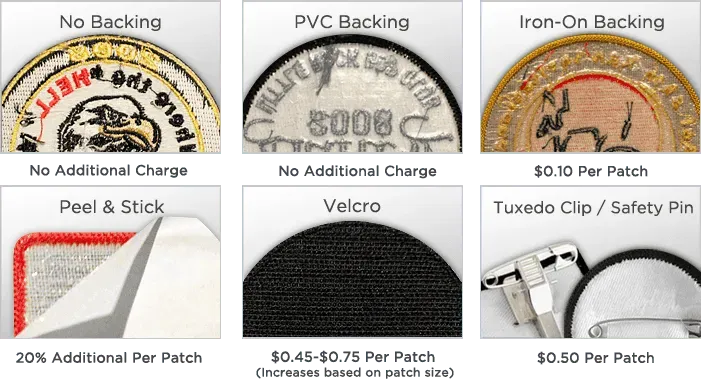
Understanding backing and finishing for custom embroidered patches is essential for durability, ease of application, and the final look on any garment. Knowing the types of patch backing helps predict stiffness, how the patch holds its shape, and its performance in washes. If you’re weighing iron-on backing vs sew-on backing, consider fabric sensitivity, laundering frequency, and whether you want a quick or long-term attachment. Merrow edge finishing provides a durable, premium border that guards against fraying and adds a polished touch. For those who need speed, heat seal backing for patches can deliver a clean look, while custom patch finishing options let you fine-tune stiffness and texture.
Put differently, the choice of backing and border treatment shapes how a patch adheres to fabric and stands up to repeated laundering. When people discuss attachment methods, they often think in terms of adhesives versus stitching, which affects removability, washability, and garment care. Edge finishing options—from Merrow-style overlock to laser-cut finishes—help convey brand personality while boosting durability and preventing fraying.
Understanding Patch Backing: Types of Patch Backing and Their Impact on Durability
Backing is the foundation beneath embroidery that influences stiffness, application behavior, and how well a patch withstands wear and washing. When considering backing, the key option categories are tear-away, cut-away, stabilizers, and fusible backings. Tear-away backing is lightweight and easy to remove once stitching is complete, making it a common choice for designs where extreme durability isn’t required. Cut-away backing, by contrast, remains attached and provides a sturdier base that helps patches hold their shape on knit fabrics and items that see frequent laundering.
Stabilizers and fusible backings add another layer of nuance: fusible backings heat-attach to the garment, offering a semi-permanent or permanent bond depending on the product and method. Beyond the backing itself, adhesive-backed options introduce another dimension, especially for iron-on patches. Understanding the interplay between backing type, fabric, and washing cycles is essential to avoid distortion, fraying, or edge lifting over time.
Iron-On Backing vs Sew-On Backing: Choosing the Right Method for Your Patch
Iron-on backing uses heat-activated adhesive to bond the patch to fabric, delivering a fast, glue-free finish ideal for temporary placements or designs on heat-tolerant fabrics. When opting for iron-on backing, it’s important to consider garment material, heat sensitivity, and typical washing frequency. For added security on items with heavy wear, many designers soften the bond by sewing around the edge after heat application.
Sew-on backing remains the traditional, highly durable method. Patches sewn onto garments generally resist repeated washing, abrasion, and heavy use better than most adhesive-backed options. Sew-on backings are especially forgiving on delicate fabrics and are often preferred for uniforms, outerwear, and gear that will endure frequent laundering.
Heat Seal Backing for Patches: Pros, Cons, and Best Applications
Heat seal backing is another adhesive-based option that bonds the patch to fabric using heat, creating a clean look without visible stitching on the patch front. It works well for lightweight or bulky patches where sewing isn’t practical, and it aligns with fast production timelines.
However, performance can vary with fabric type, washing cycles, and heat settings. Some fabrics may degrade or wear unevenly over time, especially in high-friction areas. If you’re considering heat seal backing for patches, testing on representative fabrics and planning a backup sewing step for high-use items can help ensure long-term durability.
Merrow Edge Finishing: A Premium Edge for Longevity and Aesthetics
Merrow edge finishing is the iconic overlocked border that surrounds the patch, providing a durable, polished edge that resists fraying and adds a premium feel. Available in multiple thread colors (including metallics), Merrow edges can be tailored to match or contrast with the embroidery, enhancing the overall brand aesthetic.
Other edge options, such as satin borders, laser-cut edges, or even raw cuts, offer different looks and production considerations. Merrow edges are especially popular for outdoor gear and activewear where durability and a clean, finished silhouette matter most, making them a go-to choice for many patch projects.
Custom Patch Finishing Options: Satin Borders, Laser-Cut Edges, and Edge Combinations
Custom patch finishing options extend beyond Merrow to include satin borders, laser-cut or die-cut edges, and edge combinations that align with the design language and garment type. Satin borders provide a dense, refined outline that complements dense embroidery, while laser-cut edges create a modern, minimalist silhouette that works well with sleek designs.
Choosing the right edge finish also depends on the patch size, backing, and intended use. Laser-cut and die-cut edges are precise and fashion-forward but require careful backing selection to prevent fraying. A no-edge-finish approach can be intentional for certain designs, though it may sacrifice durability on high-wear items.
Putting It All Together: Backing and Finishing for Custom Embroidered Patches
Selecting backing and finishing is a holistic decision that balances fabric compatibility, patch size and density, intended use, and washing conditions. Start with the fabric and application method, then choose backing (tear-away, cut-away, fusible, or adhesive) and decide between iron-on, sew-on, or a combination approach for long-term durability. Finishing—whether Merrow edge finishing, satin borders, or laser-cut edges—should harmonize with the design and brand aesthetic.
Practical steps include validating with samples, testing wash cycles, and providing care instructions to patch owners. Careful testing helps confirm that the backing and finishing you select will hold up under real-world use. By focusing on backing and finishing for custom embroidered patches, you can deliver patches that look great, perform reliably, and endure the environments they’ll inhabit.
Frequently Asked Questions
What are the common types of patch backing to consider in backing and finishing for custom embroidered patches?
Common patch backing types include tear-away, cut-away, fusible backing, and adhesive backing for iron-on patches. Tear-away is lightweight and easy to remove but may leave residue; cut-away offers durability and shape retention, especially on knit fabrics; fusible backing fuses to fabric for semi-permanent attachment; adhesive backing provides quick, no-sew placement but may require sewing for long-term wear. Choose based on fabric type, embroidery density, and washing expectations to support the patch’s longevity.
In backing and finishing for custom embroidered patches, how do iron-on backing and sew-on backing compare?
Iron-on backing offers quick, no-sew placement and is convenient for temporary applications, but durability can vary with fabric type and washing. Sew-on backing provides the most durable attachment, thriving under frequent washing and heavy use. Often a combination works best—start with iron-on for placement and finish with sewing around the edge for long-term durability.
What is heat seal backing for patches, and when should I use it in backing and finishing for custom embroidered patches?
Heat seal backing uses heat-activated adhesive to bond the patch to fabric, delivering a clean look without visible stitching. It enables quick application but performance depends on fabric type, heat settings, and washing cycles. For high-use items, test on representative fabrics and consider a backup sewing step to ensure lasting attachment.
What is Merrow edge finishing, and why is it a popular custom patch finishing option?
Merrow edge finishing is an overlocked border that provides a durable, finished edge around the patch. It resists fraying and adds a polished, premium look, available in many thread colors including metallics. Merrow edges are especially popular for outdoor gear and activewear where durability and a strong frame are important.
How should I choose backing and finishing options for patches intended for frequent washing or knit fabrics?
For knit fabrics and frequent washing, choose a sturdier backing like cut-away to prevent distortion, and pair it with a durable edge finish such as Merrow. Tear-away can be suitable for light-duty designs on rigid fabrics, while laser-cut or satin borders offer a sleeker look for certain designs. Always align backing and finishing with fabric compatibility and expected wear.
What care tips and best practices should guide you when selecting custom patch finishing options to maximize longevity?
Test patches on representative garments to observe how backing and finishing hold up in washing and wear. Provide care instructions to patch owners (e.g., avoid high-heat tumble drying for iron-on or heat-seal patches). Choose edge finishes and backing that balance aesthetics, durability, and fabric compatibility, and consider samples to validate real-world performance before full production.
| Topic | Key Points |
|---|---|
| Backing types | Tear-away: lightweight and easy to remove; may leave residue. Cut-away: more durable and stable, holds shape, good for frequent washing and knit fabrics. Stabilizers/fusible backing: heat-fuse to fabric for semi-permanent to permanent attachment. |
| Adhesive-backed vs sew-on | Iron-on: quick, removable; requires heat and fabric considerations; can be reinforced by sewing. Sew-on: traditional and most durable; withstands washing and abrasion; better for delicate fabrics. |
| Heat seal backing | Adhesive-based option using heat to bond; quick and clean with no visible stitching. Performance varies by fabric and wash; may need backup sewing for high-use items; test on representative fabrics. |
| Edge finishing | Merrow edge: durable overlocked border; satin borders: dense but more thread; laser-cut/die-cut edges: modern silhouette; no edge finish: raw look. Merrow is common for outdoor Gear and activewear. |
| Putting it together | Consider fabric compatibility, patch size/density, intended use and washing, application method, and aesthetic goals to select backing and finishing that suit the design and brand. |
| Implementation steps | Define purpose, choose backing, decide on adhesion or sewing, select finishing, validate with samples, and provide care instructions. |
| Common pitfalls | Overlooking fabric compatibility; skipping edge finishing on high-wear items; ignoring washing conditions; not testing with samples. |
| Cost and lead time | Backings and finishes affect price and production time. Tear-away and cut-away are common and affordable; specialty backings or finishes add time and cost. Request samples and durability tests. |
| Maintenance and longevity | Provide care instructions; iron-on/heat-seal patches require careful washing; sew-on patches tolerate harsher washing but still need care to avoid damage. |
Summary
Conclusion