
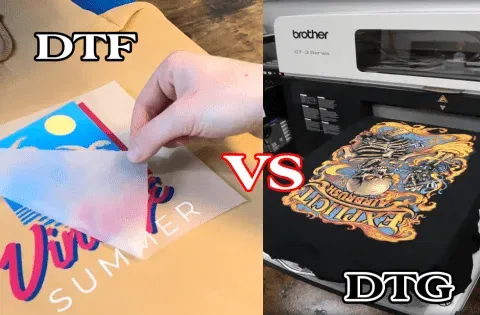
DTF vs DTG is a defining choice for apparel brands weighing production needs and design fidelity. The broader substrate compatibility and the efficiency of large-batch programs attract many brands, while the competing approach emphasizes precision on select fabrics, color management nuances, and streamlined post-print finishing. Direct-to-film vs direct-to-garment is a practical shorthand for comparing workflows, substrate support, and how each approach ultimately feels on garments. For many brands, the decision hinges on cost structure, production speed, and how durable a finish remains after repeated washing. This overview frames a practical comparison of these methods to help determine the best printing method for apparel across typical order profiles.
From a broader semantic view, you can think of the film-transfer path and the garment-direct route as two expressions of the same goal: vivid color, consistent results, and scalable production. The film-transfer approach uses a printed sheet that is then bonded to fabric, while the direct-to-garment process applies ink directly to the textile for crisp detail. Both methods benefit from careful fabric selection, pretreatment where required, and optimized curing or setting steps to maximize durability. By mapping your product requirements—fabric mix, run size, and desired hand feel—to these transfer and direct-print paradigms, you can choose an approach that aligns with your brand’s speed, cost, and quality goals.
DTF vs DTG: How Each Printing Method Impacts Fabric Range, Feel, and Costs
DTF printing involves printing on a PET transfer film with pigment-based inks, then coating the film with a powdered adhesive and curing it before heat-pressing the image onto the fabric. This process supports a broad range of fabrics—from cotton blends to polyester—making it a versatile choice for brands that mix substrates. Because the artwork travels on a film rather than directly on fabric, you can batch-print designs and reuse films across many garments, which can improve color consistency and up-scaling efficiency as volume grows.
DTG printing, by contrast, applies inks directly to the garment with an inkjet-based system. It delivers ultra-detailed gradients and photo-inspired art on fabrics that absorb the ink well, especially 100% cotton. However, DTG’s performance depends on fabric type and pretreatment, and bigger runs or heavier designs can drive up per-unit costs and setup times as more colors or complex images are added. This contrast helps explain why many brands weigh DTF printing against DTG printing when planning production timelines and budgets.
DTF Printing Advantages: Why It Excels Across Fabrics and Large-Volume Runs
DTF printing offers strong color reproduction across a broad range of fabrics, including cotton blends, polyester, and blends that challenge DTG. The film-based transfer and adhesive enable reliable performance on substrates with varying textures, helping brands maintain color fidelity across product lines. This versatility makes DTF a practical choice for catalogs that span many fabrics and weight classes.
Batch-oriented DTF can lower per-unit costs for large runs, since you can print on films in parallel and apply them in bulk. It also tends to be less sensitive to minor fabric variance, which helps maintain consistency when you print across a mixed catalog. While the process adds an adhesive coating step, disciplined curing and proper adhesion management can minimize hand feel issues and preserve softness on many textiles.
DTG Printing Strengths: High-Detail Artwork and Smooth Gradients on Cotton
DTG shines with fine detail, smooth gradients, and photo-like quality on light fabrics, particularly 100% cotton or high-cotton blends. The direct application of textile inks allows high-resolution artwork without screens, making it ideal for small-batch runs and on-demand customization. Pretreatment and color management are essential to maximize vibrancy and ensure consistent results across orders.
While DTG excels in detail, it can require careful handling when fabrics vary or when printing on dark garments. Pretreatment costs, curing times, and varying per-unit costs when runs scale up are important considerations. For design-heavy catalogs with lots of micro-details, DTG’s digital inkjet approach often delivers the best visual effect on compatible fabrics.
Direct-to-Film vs Direct-to-Garment: Substrate Compatibility and Real-World Results
Direct-to-film vs direct-to-garment summarizes two distinct workflows. DTF tends to perform well across cotton, blends, and even polyester, offering durable transfers and consistent results across a broad fabric mix. The transfer film and adhesive layer are designed to remain robust through multiple washes when cured properly, which is a key reason brands lean on DTF for mixed catalogs.
DTG prints directly onto fabric and relies heavily on fabric composition and pretreatment. While it can achieve remarkable detail on light fabrics, dark fabrics require underbases and extra steps that can impact turnaround times and overall cost. End-use outcomes—hand feel, edge crispness, and wash durability—vary with fabric type, making direct comparison essential when considering direct-to-film vs direct-to-garment for a given product line.
Cost Comparison DTF DTG: An ROI-Focused Look at Equipment, Materials, and Per-Unit Costs
Both methods have distinct cost profiles. DTG printers and their consumables (pretreatment, curing systems, and specialty inks) can require a larger upfront investment, while DTF setups may be more affordable and benefit from batch efficiencies. Per-unit costs depend on order size, fabric, and color complexity, so brands should map typical SKUs and run pilots to estimate true costs in a cost comparison DTF DTG.
Other long-term considerations include waste, energy usage, maintenance requirements, and the potential for faster turnarounds through batch processing with DTF. A pilot batch using representative designs helps forecast profitability and helps decide which method delivers better ROI for the brand’s target volumes and fabric mix.
Best Printing Method for Apparel: A Practical 5-Question Framework for Decision-Makers
This framework helps brands decide the best printing method for apparel by focusing on five practical questions: fabrics that dominate the line, typical order sizes, the importance of ultra-precise gradients, price sensitivity and margins, and turn-around time. Answering these will reveal whether DTF printing or DTG printing better aligns with your catalog and goals, and where a hybrid approach might add value.
From a strategic standpoint, many brands use a hybrid model that leverages DTF for bulk production across varied fabrics and DTG for high-detail artwork or cotton-rich items in small runs. This aligns with the idea of choosing the best printing method for apparel based on product type and market segment, ensuring you meet both cost and quality targets while staying agile.
Frequently Asked Questions
DTF vs DTG: What are the key differences between DTF printing and DTG printing, and when should you choose each method?
DTF printing uses a transfer film with an adhesive, while DTG prints directly onto fabric using textile inks. DTF offers broad substrate compatibility (cotton, blends, polyester) and efficient batch production, whereas DTG shines on 100% cotton with high-detail gradients on light fabrics. If you need scalable runs across diverse fabrics, DTF is often the better fit; for small runs with intricate artwork on cotton, DTG is commonly the best printing method for apparel.
Direct-to-film vs direct-to-garment: How does fabric compatibility differ between DTF printing and DTG printing?
DTF tends to perform consistently across a wide range of fabrics, including blends and synthetics, making it a strong choice for mixed fabric catalogs. DTG is strongest on 100% cotton or cotton-rich blends but may require pretreatment on darker fabrics or non-cotton materials. This means DTF is a versatile option for diverse fabric mixes, while DTG delivers optimal results on cotton-heavy garments.
What is the cost comparison DTF DTG for small-batch vs large-batch orders?
DTG often has higher per-unit costs for very small runs due to setup, pretreatment, and curing steps, but it excels at detailed art on cotton. DTF scales well for larger production runs, with lower incremental costs per garment as volumes grow and with batch printing on films. A pilot batch can help you quantify the cost differences for your typical designs and order sizes.
Which is the best printing method for apparel if you need rapid customization and a soft hand on cotton – DTF printing or DTG printing?
DTG printing supports rapid customization and delivers a soft hand on 100% cotton garments, making it ideal for frequent design changes. DTF offers efficient batch production across a broad fabric range but can feel firmer if the adhesive cure isn’t optimized. For fast-change, cotton-focused lines, DTG is often preferred; for mixed fabrics and bulk runs, DTF can be more efficient.
How do you decide between DTF printing and DTG printing when your catalog includes cotton, blends, and synthetics?
Use a decision framework: assess fabric mix, typical order size, and design complexity. If your line spans multiple fabrics and you run larger batches, DTF generally provides broader compatibility and cost efficiency. If you prioritize ultra-detailed artwork on cotton, DTG can be the better choice, and many brands use a hybrid approach to leverage both methods across product lines.
Can brands benefit from a hybrid approach using both DTF and DTG, and how would you implement such a strategy?
Yes. A hybrid strategy assigns product groups to the most suitable method—cotton-heavy items with DTG for detail, and broad-fabric or bulk designs with DTF for efficiency. Implement by running parallel workflows, standardizing color management, and conducting cost pilots to validate profitability before full-scale adoption.
| Topic | DTF | DTG | Notes |
|---|---|---|---|
| Definition | Prints design on transfer film using pigment inks, then coated with adhesive and heat pressed. | Prints directly onto fabric with textile inks via a DTG printer. | |
| Substrate compatibility | Broad fabric compatibility (cotton blends, polyester, various textiles) | Best on 100% cotton or cotton-rich blends; dark fabrics require pretreatment | Fabric versatility across garments |
| Color & detail | Deep, saturated colors; bold designs; edges can be crisp with proper curing | Photorealistic detail and smooth gradients on light fabrics | |
| Durability & hand feel | Adhesive transfers; potential stiffness if not cured; hand feel improves with control | Soft hand on cotton; curing and pretreatment affect durability | |
| Production speed & scalability | Efficient in batches; batch transfers can lower per-unit costs | Excellent for small-batch customization and rapid design changes | |
| Cost considerations | Lower per-unit costs with large runs; extra adhesive step adds time | Higher upfront and per-unit costs for small runs; color management needed | |
| Dark fabrics | Works well across fabrics including darks due to transfer film | Struggles on dark fabrics without pretreatment; white underbase often required | |
| Choosing which method | Good for broad fabric mix and batch efficiency | Best for ultra-detail artwork on cotton and rapid small-batch customization | Hybrid approaches possible |
Summary
DTF vs DTG: These are two mature, capable printing technologies with distinct strengths. DTF tends to excel when you need broad fabric compatibility, efficient bulk production, and strong color durability across diverse materials. DTG shines when ultra-detailed artwork, soft hand feel on cotton garments, and rapid on-demand customization are priorities. For many brands, a hybrid approach—using DTF for certain product lines and DTG for others—delivers the best balance of cost, speed, and design quality. To decide, map your fabric mix, average order size, design complexity, and budget, then run a pilot test to compare real-world results. In short, understanding where each method shines helps you build a scalable production strategy that aligns with your brand goals and customer expectations.