
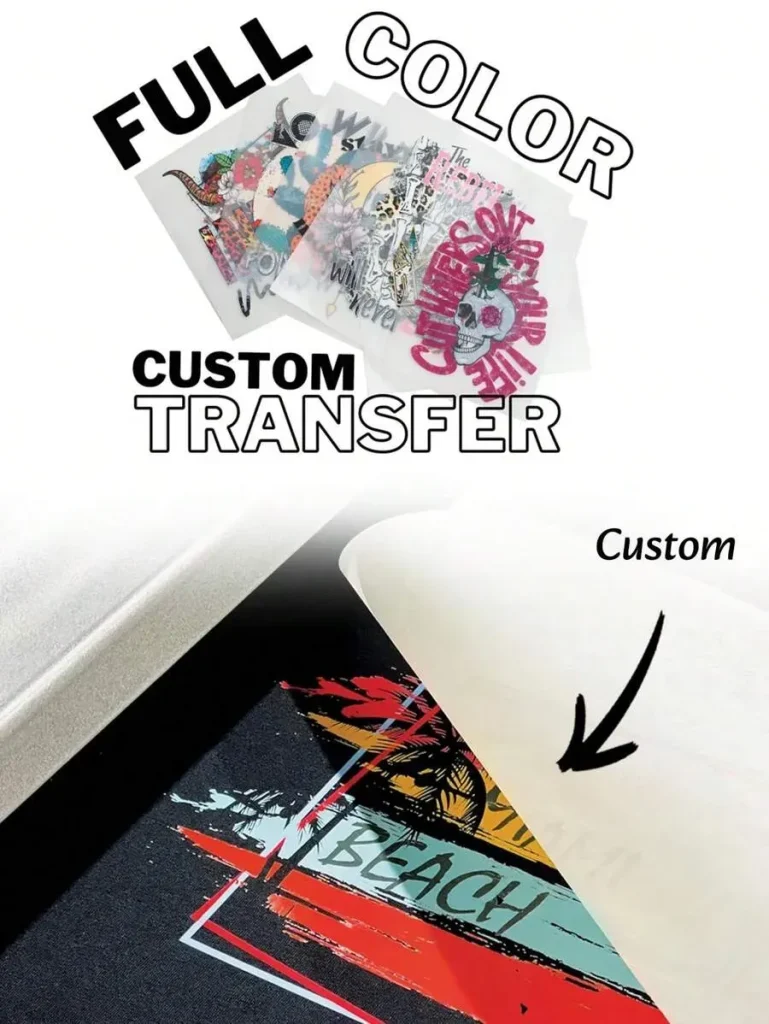
DTF artwork to sheets redefines how brands turn designs into transfer-ready sheets, delivering faster production, tighter color control, and less waste. By coordinating multiple designs on a single gangsheet, the process aligns with a streamlined DTF printing workflow and leverages a robust gangsheet builder. Sheet size optimization is at the heart of this approach, letting shops maximize printable space while preserving margins and color fidelity for each DTF sheet. Direct-to-film transfers benefit from well-planned layouts that reduce setup times, improve consistency, and scale production without sacrificing detail. Whether you are a small atelier or a larger shop, mastering DTF artwork to sheets lays the groundwork for reliable, market-ready results.
Think of this approach as assembling multiple designs on a single, wide print sheet, a strategy that mirrors efficient film-to-fabric transfer workflows. Instead of handling each artwork separately, designers employ a consolidated layout that uses a gangsheet mindset to maximize material use and minimize setup changes. The idea hinges on precise spacing, color coordination, and automated placement, aligning with a modern DTF process that emphasizes consistency across batches. In practice, teams map assets to large sheets, optimize the canvas, and translate the plan into production-friendly files that feed directly into the printer’s RIP.
1) Enhancing the DTF printing workflow with strategic gangsheet planning
Optimizing the DTF printing workflow starts long before the press runs. By planning gang sheets and arranging multiple designs into a single printable area, shops can maximize printer throughput, minimize setup time, and maintain consistent color across batches. This approach aligns with best practices in DTF printing workflow, ensuring that every file moves smoothly from design to film to fabric.
A well-designed gangsheet strategy reduces material waste and simplifies post-processing. Emphasizing margins, bleed, and safe zones helps protect critical artwork, while standardized templates and color management routines keep operations repeatable. By integrating the gangsheet concept into daily production, teams can scale output without sacrificing the precision that DTF sheet transfers demand.
2) Sheet size optimization: squeezing more designs per DTF sheet
Sheet size optimization is the art of fitting more designs onto each sheet without compromising print quality. Understanding your printer’s maximum printable area, then arranging layouts to maximize density, is central to efficient production. This practice directly influences material usage, turnaround times, and the consistency of the final transfer.
Effective sheet size optimization also involves managing gaps, bleeds, and safe zones so that every design remains legible after trimming. Balancing resolution with print area prevents pixelation while allowing you to pack designs more densely. By routinely evaluating sheet layouts, shops can reduce waste and accelerate production across multiple run cycles.
3) DTF artwork to sheets: consolidating designs into efficient gang sheets
DTF artwork to sheets is a strategic consolidation process that places multiple designs on larger gang sheets for film transfer. This method mirrors how large textile plots are produced, but with the extra emphasis on high resolution, color fidelity, and precise alignment for DTF transfers. A strong gangsheet approach translates into higher throughput and steadier color outcomes across all designs.
The practical value lies in thoughtful layout planning—considering margins, gutters, and orientation—to fit more designs without compromising trim accuracy or alignment marks. When done well, this workflow reduces the number of separate print runs, cuts setup time, and creates a more predictable production rhythm that feeds seamlessly into your RIP software and direct-to-film processes.
4) Color management for multi-design gang sheets in the direct-to-film workflow
Color management is the backbone of reliable DTF sheet production, especially when multiple designs appear on the same sheet. Establishing standardized ICC profiles, calibrated monitors, and consistent lighting ensures color translation from digital artwork to film remains uniform. In the context of the direct-to-film workflow, global color adjustments on the entire gang sheet help preserve harmony across designs.
Investing in robust color management reduces last-minute tweaks and reprints. By treating color as an ecosystem—rather than a series of isolated tweaks—you preserve fidelity from sheet to sheet and batch to batch. This approach supports predictable outcomes, smoother production, and better alignment with the expectations of customers who receive consistent, vibrant transfers.
5) Automating layout with a gangsheet builder: saving time and reducing errors
A gangsheet builder is a pivotal tool for automating design placement, rotation, and spacing. By feeding artwork into an intelligent optimizer, shops can rapidly generate print-ready gang sheets that respect printer margins and gutter requirements. This automation directly reduces manual layout time and minimizes human error, enhancing the overall DTF printing workflow.
Using a gangsheet builder not only speeds up production but also standardizes output. Automated templates, alignment cues, and consistent file formats help ensure that every DTF sheet is ready for RIP processing with minimal adjustments. As you scale, the savings compound, delivering more designs per run and maintaining high quality across batches.
6) Quality control and validation: ensuring consistent DTF sheets from print-ready files
Quality control is essential to protect the integrity of the DTF sheet and the final garment. Implementing pre-press checks, color calibration verification, and test runs helps catch issues before mass production. A structured workflow ensures that each gang sheet matches the approved artwork and that the transfer will align correctly on the fabric.
Post-proof validation completes the loop by comparing the gang sheet output to the original designs, catching resolution shifts and color mismatches early. Clear alignment marks, proper bleed, and standardized file formats minimize processing errors in the RIP and reduce waste. With rigorous quality control, brands can sustain reliable performance as production scales and seasonal designs cycle through.
Frequently Asked Questions
What is DTF artwork to sheets and how does it impact the DTF printing workflow?
DTF artwork to sheets is the process of arranging multiple designs on gang sheets to be transferred via direct-to-film to fabric. In the DTF printing workflow, it maximizes material use, reduces setup time, and helps maintain consistent color and quality when applied with a gangsheet builder.
How does a gangsheet builder enhance DTF artwork to sheets efficiency within the DTF printing workflow?
A gangsheet builder automates placement, spacing, margins, and rotation for DTF artwork to sheets, enabling more designs per sheet and faster production. This reduces manual layout time, lowers human error, and improves overall throughput in the DTF printing workflow.
What is sheet size optimization in the context of DTF artwork to sheets, and how can you implement it?
Sheet size optimization means packing the most designs into each DTF sheet without compromising print quality. Implement by knowing printer max width/length, defining standard gang sheet templates, and using consistent margins, bleed, and gutter rules via the gangsheet builder.
How can you ensure color accuracy in DTF artwork to sheets during the direct-to-film process?
Maintain color accuracy with standardized color management: calibrated monitors, ICC profiles, and consistent RIP settings. Use proofing on gang sheets to catch color shifts before mass production and apply global adjustments across the sheet.
What are the steps to convert multiple designs into printable DTF sheets as part of the DTF artwork to sheets workflow?
Steps include: prepare artwork in the correct color space and resolution; create a gangsheet template; place designs with efficient packing; generate print-ready files with color data; add alignment marks and bleed; perform a proof to verify accuracy; export for the RIP.
What common pitfalls should you avoid in DTF artwork to sheets and when using a gangsheet builder?
Common pitfalls include misalignment from incorrect margins, under- or over-sampling reducing fidelity, color mismatches across designs on a sheet, and overpacking that can cause jams. Mitigate with strict quality control, pre-press checks, color calibration, and standardized file formats.
| Aspect | Key Points |
|---|---|
| What is DTF artwork to sheets? | Arranging multiple designs on large print sheets (gang sheets) to transfer to films and fabrics; ensures high resolution, color fidelity, precise alignment, and efficient material use. |
| Why it matters | Improves material utilization, reduces the number of print runs, lowers setup time, and enables scalable, consistent color across prints. |
| The role of the gangsheet builder | Automates placement, considers printer margins, trimming, color management, and substrate handling; reduces manual layout time and errors; supports scale and consistency. |
| Planning your layout | Audit designs for print readiness; use correct color spaces and resolution; define standard gang sheet sizes, margins, bleed, safe zones; consider color separation and film transfer nuances. |
| Practical DTF workflow steps | 1) Prepare artwork in correct color space; 2) Create a standard gangsheet template; 3) Place designs with automation features; 4) Generate print-ready files with ICC profiles; 5) Add alignment marks and bleed; 6) Validate with proofing; 7) Export final sheets to RIP. |
| Sheet size optimization | Fit more designs per sheet while preserving quality; consider printer capabilities, consistent gaps, bleed/safe zones, DPI balance, rotation/mirroring to maximize packing density; reduces waste and speeds production. |
| Color management & print-ready files | Maintain color consistency with standardized ICC profiles, calibration, and proofing; apply global color corrections on the gang sheet; ensure files include correct color data and formats for RIP. |
| Common pitfalls & best practices | Misalignment, unders/oversampling, inconsistent color; QC routines, color calibration, test runs; standardized templates, naming conventions, and a design library to speed workflows. |
Summary
Conclusion: