
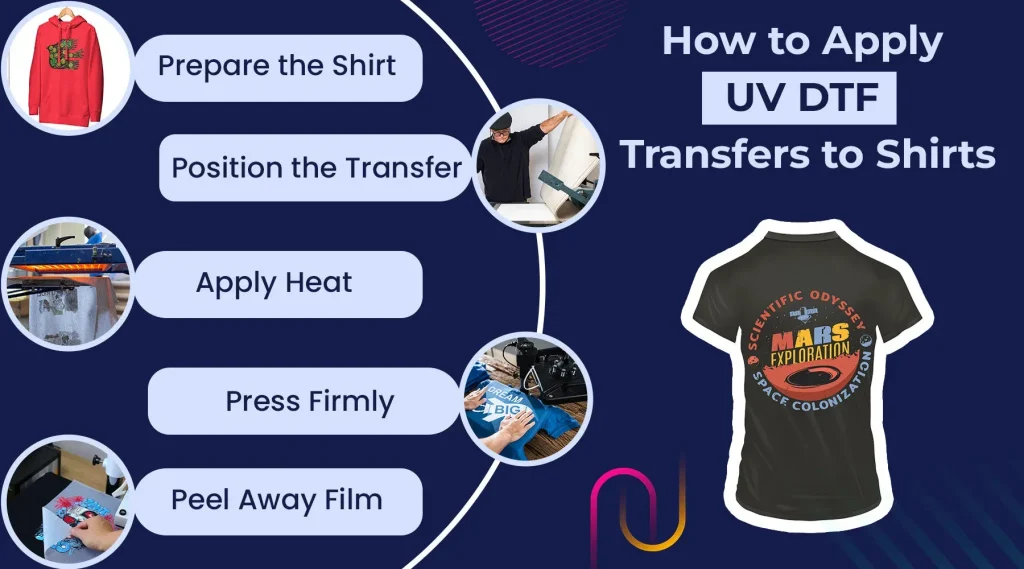
UV DTF transfer brings vibrant, high-resolution designs to apparel with precision and consistency. Compared with traditional heat press methods, UV DTF offers rich color, finer detail, and versatile fabric compatibility. For designers and small businesses, understanding the durability and washability, as well as the cost comparison, helps plan scalable production. Carefully curing and choosing compatible adhesives ensures a soft hand and long-lasting results across blends. When executed with a streamlined workflow, UV DTF transfer can deliver strong color vibrancy and reliable performance, making UV DTF transfer a compelling option for brand owners and contract printers.
Another way to describe this approach is a UV-curable film transfer that uses ultraviolet inks to imprint images onto textiles. This method pairs a film with an adhesive layer and a dedicated cure step, aligning well with workflows that favor multi-color prints and sharp edges. From a fabrics perspective, the technique shares similarities with direct-to-film processes and compares with vinyl and sublimation in terms of color reproduction and durability. Operators often weigh upfront costs, production speed, and maintenance when selecting between film-based imaging, high-detail transfers, and traditional heat transfer platforms. By testing on your target materials and adjusting curing, you can achieve vivid graphics and consistent wash performance across varied garments.
UV DTF Transfer vs Heat Press: Durability, Washability, and Real-World Performance
Durability and washability are central to choosing an apparel transfer, and UV DTF transfer often shows strong color retention and edge definition across multiple wash cycles. The UV inks and film-based workflow can yield stable images on a variety of fabrics, especially blends used in everyday wear. Still, real-world results hinge on the adhesive system, ink formulation, fabric type, and care instructions, so following vendor-specific curing and washing guidelines is essential for longevity.
Heat press transfers—whether vinyl, sublimation, or film-based options—also deliver solid durability when applied correctly. Some vinyl types may crack or delaminate in high flex areas, and sublimation usually performs best on polyester. In practice, durability and washability depend as much on the design and substrate as on the method itself, making proper workflow and post-press care critical for maintaining long-term garment performance.
Color Vibrancy and Detail: How UV DTF Transfer Elevates Complex Graphics
One of the strongest appeals of UV DTF transfer is color vibrancy and the ability to reproduce fine gradients and intricate details. UV inks deliver bright, saturated hues with smooth transitions, which helps reproduce photographic artwork and small typography with crisp edges. The film-based nature of UV DTF reduces color bleeding and supports high-fidelity reproduction on a range of fabrics, enhancing overall design impact.
Heat press methods vary in color performance by transfer medium. Vinyl can produce sharp color but may introduce a thicker edge that affects hand feel, while sublimation provides seamless color on polyester surfaces. When color fidelity is paramount across diverse fabrics, UV DTF transfer often offers superior edge clarity and vibrancy for complex artwork and multi-color logos, yielding a more uniform look across garments.
Cost Comparison: Equipment, Consumables, and Per-Unit Economics
A thorough cost comparison starts with upfront investments: UV DTF typically requires a UV-capable printer, a curing system, heat press, and a supply chain for films, adhesives, and powders. These components can push initial capital beyond a basic heat press setup, especially for new entrants seeking full-color capability and flexible substrate options.
Ongoing costs include consumables, maintenance, and per-unit expenses. Heat press systems often have lower initial costs and can be more economical for simple designs or small runs. For high-coverage, full-color work, UV DTF can become cost-competitive because a single transfer can carry complex imagery without layering multiple films or screens, though labor time and material waste must be considered in the final cost comparison.
Fabric Compatibility and Design Flexibility: A Broad View Across Garment Materials
UV DTF transfer tends to perform well across a broad range of fabrics, including cotton, blends, and some poly blends, making it a versatile choice for mixed-material collections. Its ability to reproduce fine details and smooth gradients is especially valuable when your line includes varied fabric weights and textures, from lightweight tees to thicker hoodies.
Heat press methods offer wide fabric compatibility as well, but performance hinges on the transfer type. Sublimation is best suited for polyester and poly-coated substrates, while vinyl adheres to many fabrics but can alter the hand feel. The right approach often depends on your fabric mix, care instructions, and whether you need photographic imagery or simpler logo designs with consistent color across garments.
Production Speed, Throughput, and Scalability: Planning for Growth with UV DTF and Heat Press
Production speed is a balance of setup time, curing requirements, and design complexity. UV DTF can handle multi-color designs efficiently by printing once on transfer film and then curing before pressing, but the additional print-and-cure steps can affect throughput for small shops. Heat press workflows—especially for simple, high-volume runs—can be faster when the transfer media are quick to apply and require minimal post-press processing.
Many shops find a hybrid approach optimal: reserve UV DTF for flagship or highly detailed designs and use heat press for bulk orders or simpler items. This strategy supports scalability by matching production steps to job complexity and volume, while maintaining consistent quality across diverse product lines.
Design Complexity and Typography: Leveraging UV DTF for Fine Detail vs Traditional Heat Press Methods
For complex typography and photographic graphics, UV DTF transfer shines with its ability to capture small text and gradients without heavy layering. Accurate pre-production checks, precise alignment, and testing across fabrics help minimize misprints and ensure high fidelity during production runs.
Traditional heat press methods can provide robust repeatability when paired with controlled screening, cutting, or vinyl processes. While vinyl edges can feel thicker on some designs, sharp color blocks and clean typography are achievable with careful substrate selection and consistent press parameters, making heat press a reliable choice for straightforward branding and high-volume items.
Frequently Asked Questions
What is UV DTF transfer and how does it compare to a heat press for apparel?
UV DTF transfer uses UV-curable inks printed on a film and then heat pressed with an adhesive to transfer the design. Compared to traditional heat press methods, UV DTF offers high color vibrancy, sharp detail, and broader fabric compatibility. Durability and washability are strong when you follow the recommended curing instructions, but initial equipment costs can be higher than a basic heat press setup.
Are UV DTF transfers durable and washable across common fabrics?
Yes, UV DTF transfers typically show excellent color retention and edge definition across multiple wash cycles. Durability depends on the adhesive, ink formulation, fabric type, and care instructions. Following vendor guidelines and proper curing helps maximize washability.
Do UV DTF transfers deliver strong color vibrancy and fine detail compared to heat press options?
UV DTF inks provide vivid color with smooth gradients and crisp edges, enhancing color vibrancy and detail. The film-based process helps prevent color bleeding, making multi-color designs pop. Some heat press options (like vinyl) can add texture, while UV DTF often preserves a soft hand.
Is UV DTF transfer cost-effective for small production runs when compared with heat press?
Initial equipment costs for UV DTF—printer with UV inks, curing unit, and transfer films—tend to be higher than a basic heat press setup. For high-color, high-coverage designs, per-unit costs can be competitive due to fewer film layers, but for very small runs, heat press may be cheaper. A hybrid approach can balance costs for mixed jobs.
What fabrics and color fidelity can UV DTF transfer handle on blends?
UV DTF offers broad fabric compatibility, including cotton and blends, with strong color fidelity and edge clarity. It handles varied weave types well, preserving detail and vibrancy on mixed fabrics. On non-poly fabrics where sublimation isn’t ideal, UV DTF remains a versatile choice.
What should designers consider in a production workflow when choosing UV DTF transfer vs heat press?
Consider design complexity and color count, durability and washability, care requirements, fabric mix, turnaround speed, and maintenance costs. UV DTF is well suited for highly detailed, full-color graphics, and many shops use a hybrid workflow pairing UV DTF with heat press for simpler designs or bulk runs to maximize flexibility and throughput.
| Aspect | UV DTF transfer | Heat press |
|---|---|---|
| What is UV DTF transfer? | Direct-to-film technique using UV-curable inks on film; the film is transferred to fabric using a heat press with an adhesive layer; high-resolution designs. | Heat press is a general category of equipment used to transfer designs from a medium to fabric by applying heat and pressure; common variants include clamshell and swing-away machines. |
| What is a heat press? | A device that applies heat and pressure to activate adhesives and secure designs; used across vinyl, sublimation, film-based transfers, and more. | Heat press involves applying controlled heat and pressure to transfer media onto fabric; supports a broad range of substrates. |
| Durability & washability | UV DTF transfers generally show strong color retention and edge definition across multiple washes; outcome depends on adhesive, ink formulation, fabric type, and care. | Heat press transfers can be durable when properly applied; vinyl may crack or delaminate in high flex areas; sublimation is best on polyester or polyester-coated fabrics. |
| Color vibrancy & design fidelity | UV DTF inks provide vivid hues, smooth gradients, and sharp edges; film-based nature helps minimize color bleeding and maintains detail. | Color performance varies by transfer type; vinyl is sharp but can feel thicker; sublimation yields seamless color on light polyester fabrics. |
| Cost & economics | Higher upfront costs (UV printer, curing unit, films, adhesives) but potentially favorable per-unit economics for high-coverage, full-color designs. | Lower initial investment and simpler setup; ongoing costs depend on media and maintenance; per-unit cost can be lower for simple designs. |
| Hand feel & texture | When cured properly, UV DTF can yield a soft hand with minimal texture relative to some vinyl options. | Vinyl may add texture; sublimation tends to integrate with the fabric for a smoother feel on polyester. |
| Production speed & scalability | Efficient for multi-color designs since you print on film once, then cure and press; curing/handling steps can impact throughput for small shops. | Often faster for simple, high-volume runs; direct and quick application with minimal setup per item. |
| Fabric compatibility & design flexibility | Broad fabric compatibility (cotton, blends, some poly blends); good for detailed imagery and gradients. | Wide range of fabrics supported depending on transfer type; sublimation limited to polyester; vinyl versatile across fabrics. |
| Design complexity & error rates | Captures small text and gradients well; alignment is important; test designs across fabrics and batches. | Robust repeatability with consistent pressure and timing; ensure accurate alignment and pre-production checks. |
| Environmental & maintenance considerations | Requires ventilation for UV inks and curing lamps; waste from films and powders must be managed. | Requires calibration of temperature and pressure; maintenance of heating elements and safety features. |
Summary
UV DTF transfer is a versatile option for vibrant, detailed graphics on apparel. It shines when you need high color fidelity across varied fabrics and complex artwork, offering sharp edges and strong image definition. Compared with heat press, UV DTF transfer often entails higher upfront investment and ongoing maintenance, but can be cost-effective for high-coverage, multi-color designs. For high-volume simple designs on cotton, a heat-press approach may be quicker and cheaper to operate. A blended strategy—using UV DTF transfer for intricate, full-color graphics and heat press for simpler items—can maximize flexibility and throughput. As with any process, run pilot tests on target fabrics to verify durability, washability, and visual quality before committing to large production.